


More Than a Piggy Bank

Rachel Statzell • September 18, 2026

Share this article

Why Opening a Minor Account Can Help Kids Learn About Money

The phrase financial literacy can sound more intimidating than it needs to. For many families, it brings to mind worksheets, budgets, lessons, and formal conversations around the kitchen table. Still, some of the most meaningful money lessons do not happen when everyone sits down and announces, “Today we are going to learn about finances.”

They happen while grocery shopping, when birthday money arrives in a card, or when a child wants something and has to decide whether to spend what they have now or keep saving for something bigger. Financial literacy can be casual and woven into ordinary life. When children do not feel like they are being “taught,” those experiences often become the kind of practical life lessons that stay with them.

Everyday Life Is Full of Money Lessons

Children are constantly watching how the adults around them make decisions, which means families already have plenty of opportunities to introduce healthy money habits without creating a formal curriculum.

At the grocery store, you might compare the price of two similar products. Before a family outing, you might decide together how much you plan to spend. When a child asks for something, you can talk about whether it is something they want now or something worth saving toward. These moments may feel small, but they introduce real ideas like comparison shopping, priorities, trade-offs, patience, and planning.

The key is intention. It does not necessarily take more work. It simply means recognizing the opportunities already happening around you and inviting children into the conversation.

Expectations Can Turn Everyday Tasks Into Habits

Children often do well when they know what to expect. If going to the grocery store regularly means looking at prices together, comparison shopping can eventually become second nature. If birthday money always comes with the question, “How much would you like to save?” saving becomes part of the experience instead of a separate lesson.

The same is true when a child is working toward a larger purchase. Checking progress together can become a normal part of the week rather than a formal financial exercise. These predictable routines matter because they give young people ownership.

Instead of hearing adults talk about money from the sidelines, they begin making some of their own choices. Once children are participating in those decisions, they often have a much stronger reason to care about the outcome.

A Savings Account Gives Those Lessons Somewhere to Land

Talking about saving is one thing, but seeing money accumulate in an account makes the idea much more tangible.

A child may understand that they should “save some of their birthday money,” but watching a balance grow from one deposit to the next gives that lesson a real-world connection. Suddenly, the choices they make at the store or at home are not isolated decisions. They connect to something they can actually see.

That five dollars they chose not to spend becomes part of the amount they are saving toward something they really want. The money they earned by helping with a job joins the balance already there. Over time, the account becomes more than a place to keep money. It becomes a visible record of the choices they have made.

Goal-Setting Makes Saving Personal

Kids are more likely to care about saving when there is a reason behind it. The goal does not have to be serious or long-term. It might be a new game, a bike, concert tickets, something for their room, a first car, spending money for a trip, college expenses, or something completely unique to them.

What matters is that they care about it.

When children choose their own goal, saving becomes less about following an adult’s instructions and more about deciding what they want their money to accomplish. That sense of ownership can make the process much more meaningful.

Spending Is a Choice—and That Is Part of the Lesson

Saving is important, but the goal is not to teach children that spending money is bad. Spending is one of the freedoms money gives us, and the skill is learning how to use that freedom thoughtfully.

A child who has been carefully saving for something may eventually decide that buying something smaller today is worth slowing down their progress. That does not automatically mean they made the wrong decision. Instead, it creates an opportunity to talk about the choice afterward.

Was it worth it? Would they make the same choice again? Are they still happy with the bigger goal they were working toward?

Those are valuable questions because good money management is not about never spending. It is about understanding that every choice has an effect on what comes next.

Start With the Money They Already Receive

Children do not need a large amount of money to begin practicing these skills. The most relatable opportunities are often the ones already happening in their lives: birthday money, holiday gifts, allowance, money earned from babysitting, yard work, chores, or other age-appropriate jobs, and eventually a first paycheck.

Each time money comes in, families have an opportunity to pause and ask what the child wants that money to do. Some may be spent, some may be saved, and some may go toward a larger goal.

There does not need to be one perfect formula. The value comes from helping children think about the choice rather than simply making it for them.

Turn Money Lessons Into Something They Can Practice

This is where the ideas become most useful. Instead of simply telling children to “be good with money,” give them specific, repeatable experiences that let them practice.

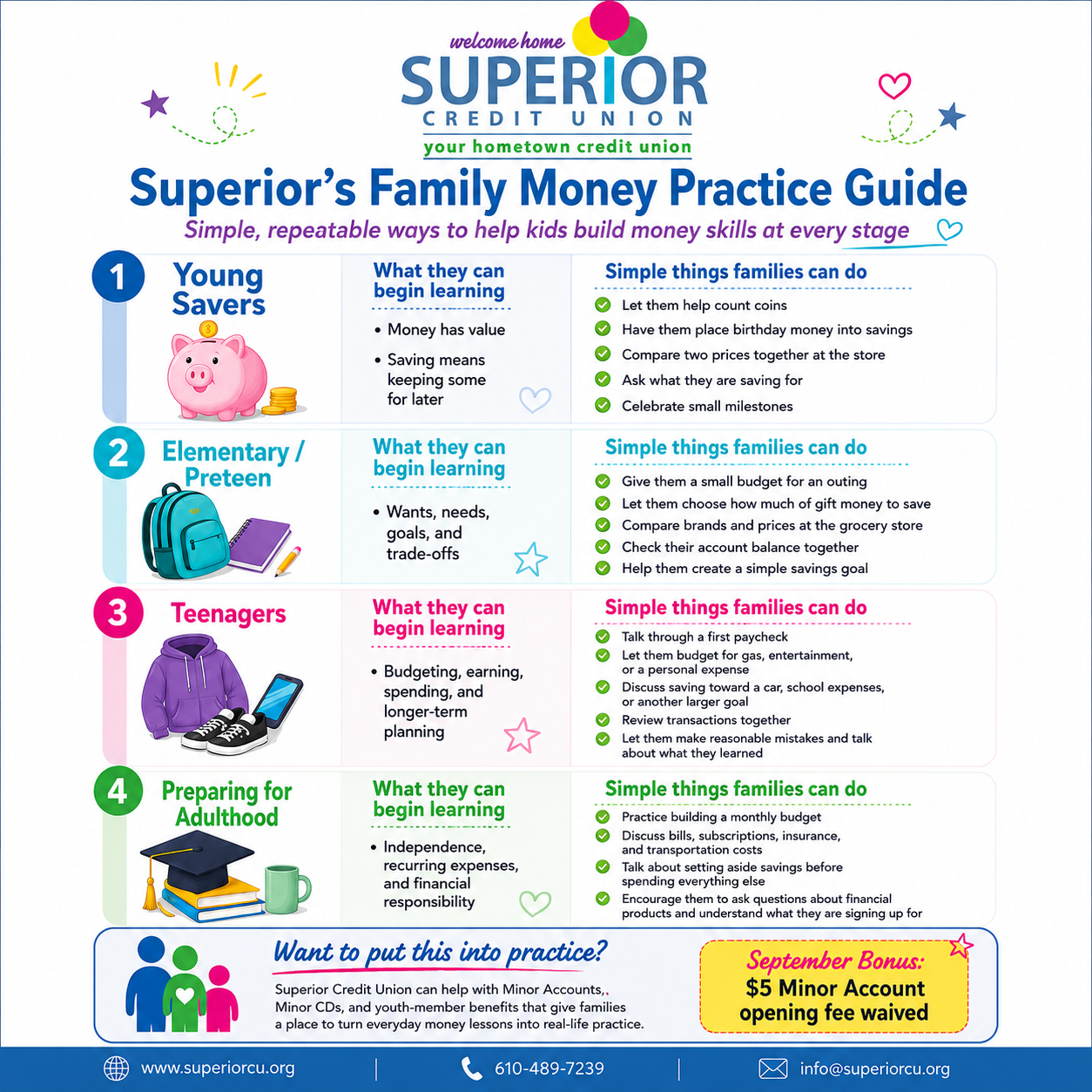
That may mean letting a younger child help count coins, giving a preteen a small budget for an outing, reviewing a teenager’s first paycheck together, or helping an older teen understand recurring expenses and basic budgeting.

The activities can change as children grow, but the approach stays remarkably consistent: give them opportunities, let them participate, talk about the choices, and repeat.

That repetition is what turns a lesson into a habit.

Superior’s Family Money Practice Guide


Let the Skills Grow With Them

A five-year-old and a seventeen-year-old obviously should not be having the exact same conversations about money, and that is one of the advantages of starting early. The lessons can grow gradually as the child does.

A young child may begin by putting coins into savings and learning that money has value. A preteen can start thinking about wants versus needs, trade-offs, and saving toward bigger purchases. A teenager can learn how to divide a first paycheck among spending, saving, and upcoming expenses.

Over time, the adult’s role can shift from making the decisions to helping the child think through their own.

That is ultimately the goal: not simply raising children who know financial terminology, but helping young people become comfortable making thoughtful decisions about money.

Superior Credit Union Can Give Them a Place to Practice

Want to start putting some of these ideas into action? That is where we can help.

Superior Credit Union offers Minor Accounts for young members ages 0–18, giving families a place to connect everyday money lessons with real saving. Current youth-account benefits include Report Card Rewards, a birthday gift-card perk, and financial-education resources designed to encourage smart money habits.

For young savers who are ready to work toward a longer-term goal, Superior also offers Minor CDs, creating another way for families to talk about patience, saving over time, and working toward future goals.

Think of those accounts as the sandbox. Families provide the conversations, experiences, and encouragement, while the account gives children somewhere to put those lessons into practice and somewhere they can actually watch their progress grow.

Start Small. Let Them Participate.

Teaching children about money does not require becoming their finance professor. You do not need elaborate lessons or perfectly planned conversations.

Start with the life you are already living. Compare a price. Talk about a purchase. Ask what they want to save for. Let them make a decision. Check their progress together.

The more opportunities children have to participate in real money choices, the less financial literacy feels like a school subject and the more it becomes simply part of how they understand the world.

Ready to help your young saver get started?


Explore Superior Credit Union Youth Accounts and learn more about our Minor Accounts, Minor CDs, and youth-member benefits.


September Bonus: During September, Superior Credit Union is waiving the $5 Minor Account opening fee for new Minor Accounts.


Recent Posts

By Rachel Statzell July 15, 2026
What to Consider Before Financing a Vehicle
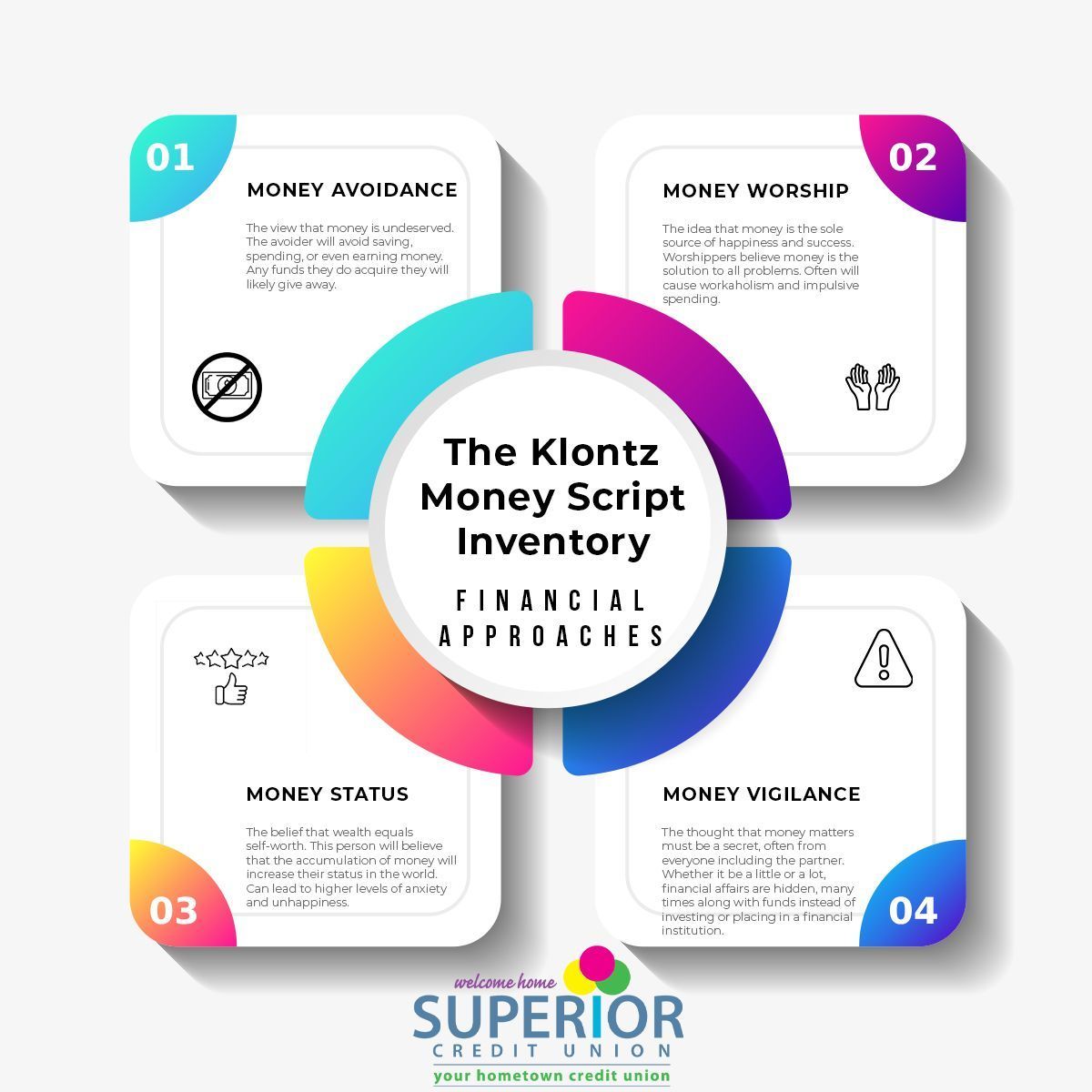
The Klontz Money Script Inventory infographic with four colored financial behavior quadrants
By Rachel Statzell August 20, 2025
The Klontz Money Script Inventory outlines the different ways people look at money and how that informs their saving and spending habits.

Lone hiker in an orange jacket walking along a snowy mountain ridge in falling snow
By Rachel Statzell August 11, 2025
Debt Snowball and Debt Avalanche are two different approaches to effective debt management and debt payoff. Each offering different methods to manage overwhelming debt.

By Rachel Statzell May 7, 2025
Get to know the in's and out's of becoming or electing a Power of Attorney for your financial future.

By Rachel Statzell April 23, 2025
Buying a used car can be a very stressful time. Read this blog and be prepared when shopping for your next vehicle. Buying used has benefits most don't realize!

By Rachel Statzell April 14, 2025
Use this blog as a guidepost to filing your Federal, State, and Local taxes every year. Don't forget a thing with our tips and reminders!

By Rachel Statzell February 13, 2025
Tips to recognize and avoid romance scams and how to protect your finances from exploitation.

By Rachel Statzell July 17, 2024
Looking for free or low cost adventures for your family in Montgomery County, PA? Click here to see the list of fun activities we compiled just for you!

By Rachel Statzell July 11, 2024
Explore tried and true ways to start saving money.

By Rachel Statzell July 9, 2024
Budgeting can be difficult, but with this blog you will be quickly on your way to saving for your next big trip or purchase!

By Rachel Statzell January 31, 2024
Planning for expenses that change from month to month can be challenging. Take a look at these tips to make it a little easier.

By Rachel Statzell January 24, 2024
Knowing which expenses are a regular part of your budget is essential to successfully managing your money. Learn what fixed expenses are, how to track them, and how much room in your budget you should allocate for them.

By Rachel Statzell January 17, 2024
Read to discover what red flags your budget may have, and how to easily fix them to get you back on the path to financial wellness.

By Rachel Statzell January 10, 2024
Gift card scams are becoming BIG problem in the fraud world. Here's what you need to know and how to avoid a gift card scam.

By Rachel Statzell January 3, 2024
The best way to protect your information is multiple layers of authentication. Learn about Two Factor Authentication (2FA) and how to make it work for you

By Rachel Statzell November 18, 2023
Take a look at all your digital information out there, and asess your fraud risk, then use this checklist to get your accounts secured with our Fraud Prevention Checklist

By Rachel Statzell November 18, 2023
Four simple tips that will make your black friday shopping trip easier, more fun, and less stressful.
By Rachel Statzell November 9, 2023
Setting up secure password practices will save you from fraud later. Read now to discover how to make it a reality

By Rachel Statzell November 8, 2023
Traveling is stressful enough, without fraud slipping in and ruining your day. Plan ahead and read this to learn the latest travel scams and how to avoid them.

By Rachel Statzell October 25, 2023
Recognizing the traits of the most common scams is the first step in protecting yourself against fraud.

By Rachel Statzell October 18, 2023
Learn the tips to differentiate between a legitimate website and a fake or imposter one.

By Rachel Statzell October 7, 2023
The basics to protecting your accounts and personal information against fraud are easy!

By Rachel Statzell October 4, 2023
If you are new to the concept of financial fraud and scams, read this to "get in the know" and become an expert in protecting your own finances.

By Rachel Statzell September 27, 2023
Getting to know credit card interest
By Rachel Statzell September 20, 2023
When it comes time to choosing a credit card, there are many factors that must be considered. In a few easy steps we explain how to find the best fit for your spending habits and financial goals.

By Rachel Statzell September 6, 2023
When choosing a credit card, all the new vocabulary can be intimidating. Here is a comprehensive list of concepts you should know before opening a credit card.

By Rachel Statzell August 28, 2023
They say money creates happiness, but is that true? Take a look at five financial bad habits that you may be doing already, and how to break them.

By Rachel Statzell August 25, 2023
Some questions you can ask yourself when considering opening a Certificate of Deposit.

By Rachel Statzell August 25, 2023
Here are the 5 things you should know when researching a financial institution to open a checking account.

By Rachel Statzell August 25, 2023
Vacations take time to plan, but why don't we take time to save for them also? Here are four reasons why you should start saving NOW for your next getaway!

By Rachel Statzell August 25, 2023
Putting money away in a savings account is a good thing, however interest rates on a traditional savings are often very low. Here are different ways you can turn those pennies into dollars!